
Dental Billing Technology Guide: Building a Dental Tech Stack

Managing dental billing has become increasingly complex as insurance requirements, documentation standards, and reimbursement timelines continue to evolve.
Industry data shows that 1 in 8 healthcare claims requires manual intervention before payment, creating delays that directly impact practice cash flow.
When billing relies on manual processes or outdated systems, even small administrative errors can create major operational bottlenecks, slowing reimbursements, increasing staff workload, and reducing financial visibility.
The solution isn’t simply working harder or hiring more staff. It’s more about building a smarter, more connected billing technology ecosystem. In this blog, we’ll take a closer look at the key tech stacks that can help dental practices streamline billing workflows, reduce errors, and improve financial efficiency.
Key Takeaways
Claim denials delay payments and disrupt cash flow.
Technology helps reduce billing errors.
There are multiple ways to integrate tech into dental billing.
A strong tech stack improves efficiency and revenue.
Revenue cycle management experts can help optimize and grow your practice.
Inside, you will learn about:
Why Dental Billing Bottlenecks Happen
Before discussing solutions, it’s important to understand why billing breakdowns occur.
Industry benchmarks estimate that approximately 11–12% of healthcare claims are denied on first submission, meaning nearly one in eight claims requires manual intervention before payment.
Most denials stem from preventable administrative issues, such as:
Incorrect CDT coding
Missing or incomplete documentation
Insurance eligibility errors
Coordination of benefits issues
Filing after payer deadlines
Inaccurate patient information
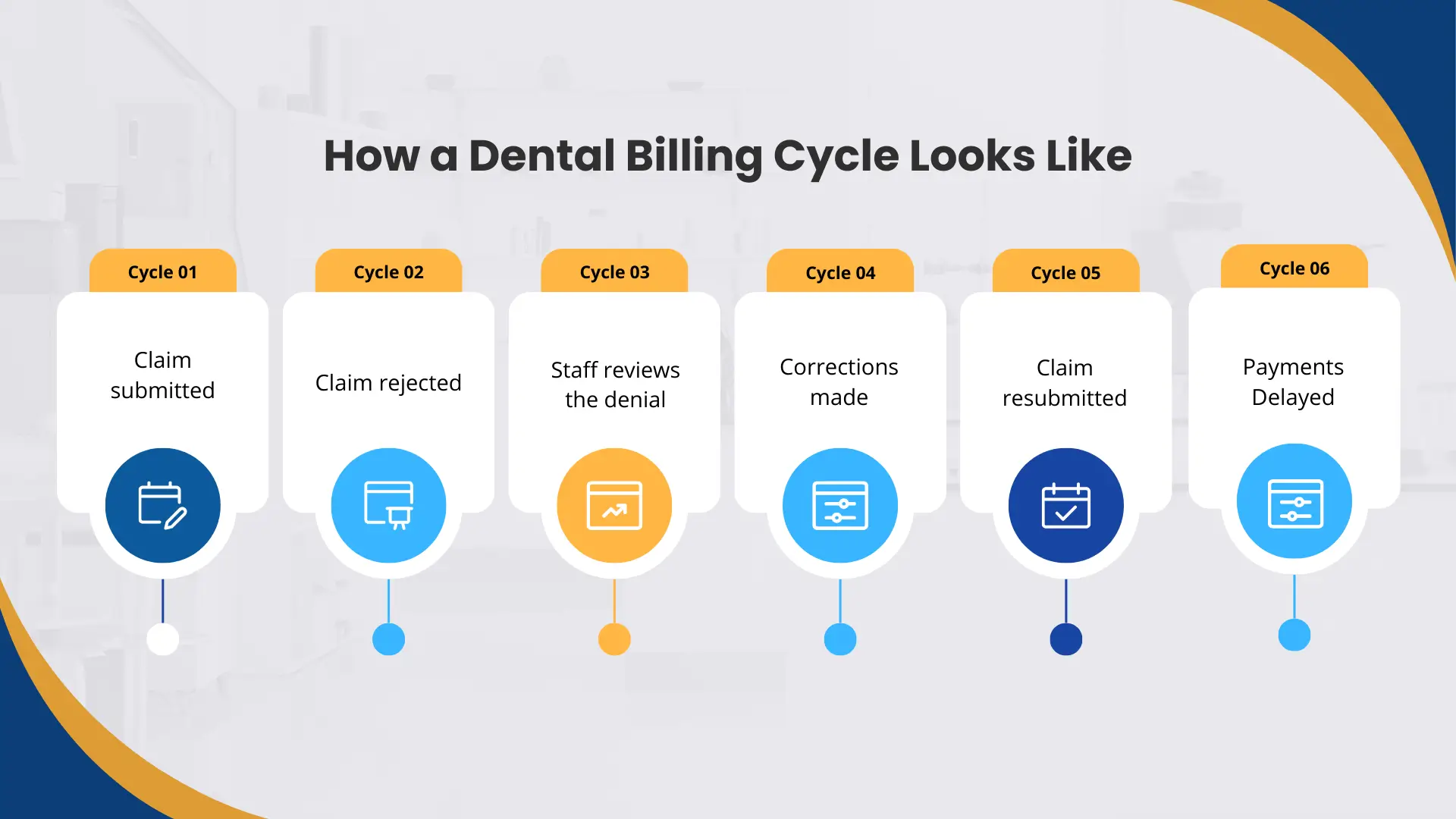
The workflow often follows a costly cycle:
1. Claim submitted
2. Claim rejected
3. Staff reviews the denial
4. Corrections made
5. Claim resubmitted
6. Payment delayed
Each repetition consumes staff time while extending reimbursement timelines. Without visibility into recurring denial patterns, practices unknowingly repeat the same inefficiencies.
Breaking this cycle requires more than process improvement alone. It requires integrated technology, otherwise known as a “tech stack”.
What Is a Tech Stack, and Why Does It Matter for Dental Billing?
A tech stack refers to a connected ecosystem of digital tools that work together to support business operations. Studies show that implementing digital health systems correlates with lower rejection rates than paper or manual systems.
In dental billing, this means integrating systems so information flows seamlessly from:

Without integration, teams must repeatedly re-enter patient and billing data, leading to increased miscommunication and human error.
An effective and integrated billing tech stack enables practices to:
Automation of repetitive administrative tasks
Real-time insurance eligibility verification
Pre-submission error detection
Centralized reporting and analytics
Transparent tracking across the revenue cycle
Instead of reacting to denials after they occur, practices become proactive in preventing them.
The goal isn’t to add more software but to align the right tools.
Core Components of an Efficient Dental Billing Tech Stack
Once practices understand the value of integration, the next step is identifying the technologies that form a high-performing billing ecosystem.
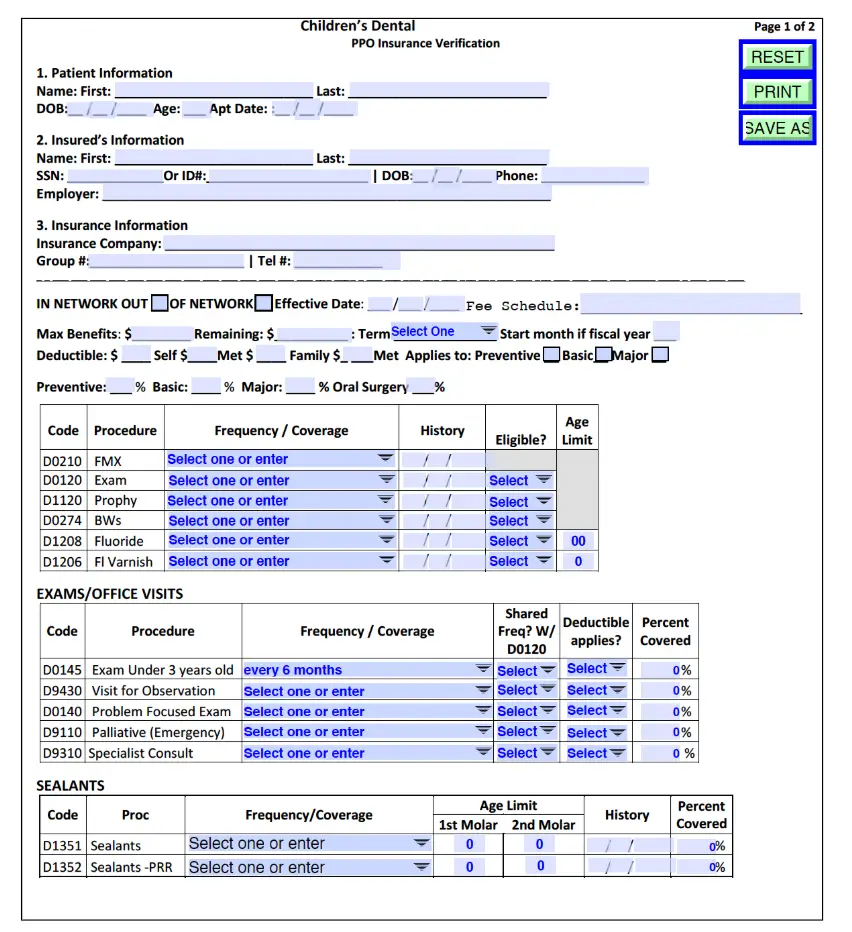
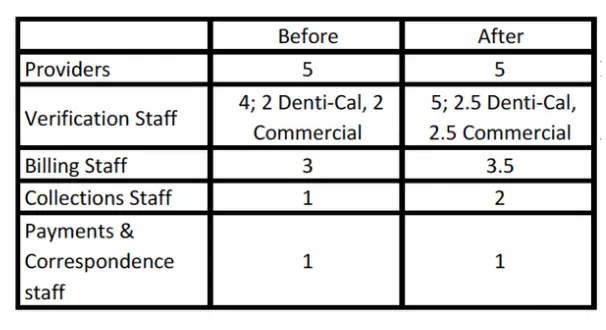
Practices that adopt integrated billing technology commonly experience:
Faster reimbursements
Lower claim denial rates
Reduced administrative workload
Improved financial forecasting
Better patient communication
More staff time focused on care delivery
Technology transforms billing from a reactive administrative burden into a predictable revenue system.
Implementing Technology the Right Way
The most successful dental practices implement billing technology strategically rather than attempting a full system overhaul overnight.
Best practices include:
Audit current billing workflows first
Identify recurring denial causes
Prioritize integrations over standalone tools
Train staff alongside implementation
Track KPIs such as denial rate and Days in Accounts Receivable (A/R)
True efficiency happens when technology is paired with an experienced revenue cycle management strategy.
To illustrate the real financial impact of structured implementation, consider the following dental clients supported by Synapse Dental Billing.

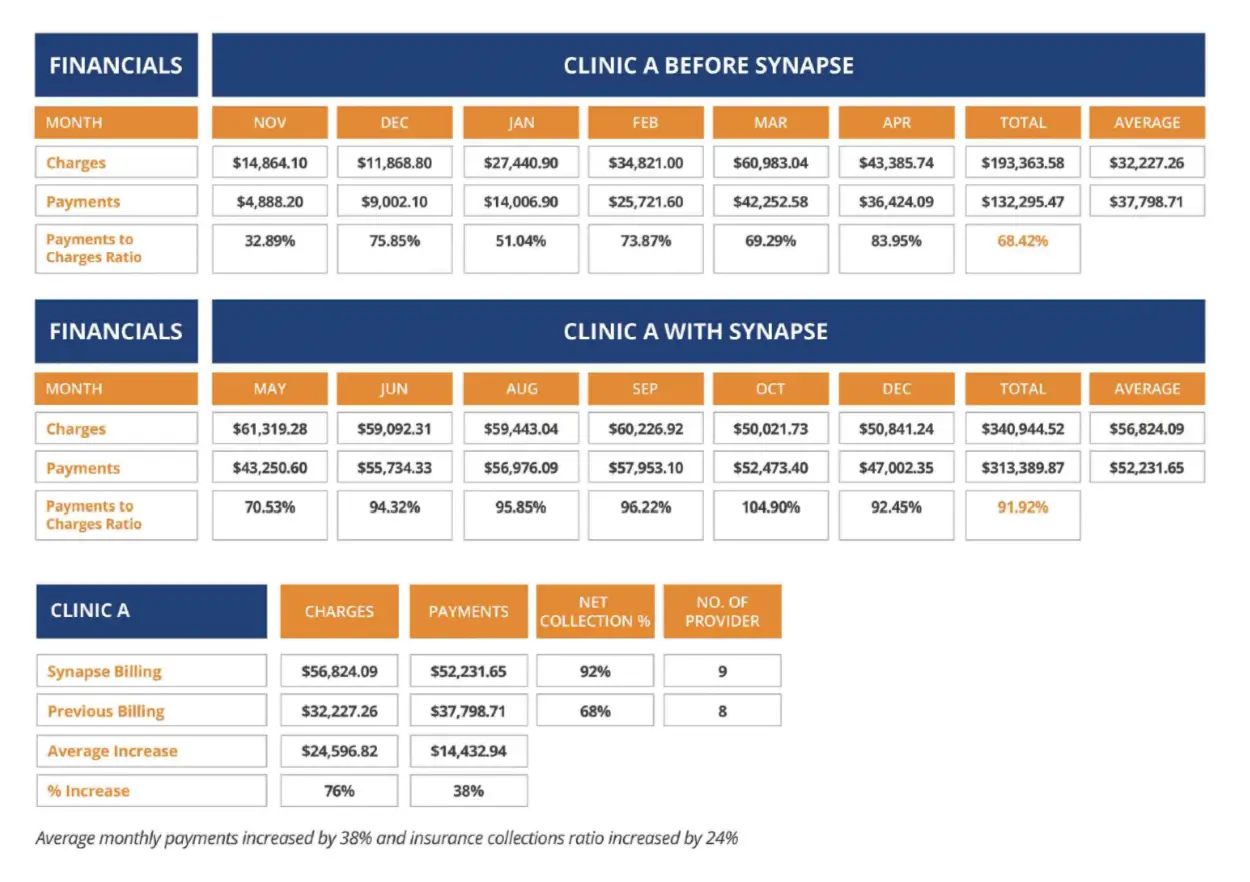
Below are examples of how Synapse Dental Billing helped practices translate implementation into measurable financial improvement.
Clinic A: Strengthening collections performance
Clinic A faced inconsistent reimbursements and limited billing visibility prior to implementation.
Results after Synapse implementation:
Monthly payments increased by 38%
Net collection rate improved from 68% to 92%
Insurance collections ratio rose to 91.9%
Practice expanded provider capacity
Monthly charges increased by 76%
Improved workflow integration and proactive claim monitoring led to faster reimbursements and greater cash flow stability.
Clinic B: Multi-Provider Practice Reducing Claim Denials
A growing dental practice experienced frequent claim rejections caused by eligibility and documentation errors.
Implementation focus:
Monthly payments increased by 38%
Net collection rate improved from 68% to 92%
Insurance collections ratio rose to 91.9%
Fewer preventable denials, reduced administrative rework, and faster payment turnaround.
Clinic C: Established Practice Improving Revenue Visibility
An established clinic struggled with delayed payments despite steady patient volume.
Implementation focus:
Monthly payments increased by 38%
Net collection rate improved from 68% to 92%
Insurance collections ratio rose to 91.9%
Clear financial visibility enabled faster collections and more predictable monthly revenue. Across all three practices, improvements came from aligning people, processes, and technology rather than simply adding new software.
Experience Technology-Driven Growth with Synapse
Modern dental billing requires more than submitting claims accurately. As insurance processes become more complex, practices need integrated technology supported by experienced revenue cycle management.
Synapse Dental Billing helps practices strengthen financial performance by combining technology, workflow optimization, and billing expertise.
With Synapse, dental practices can:
Reduce claim denials and billing errors
Improve reimbursement speed and cash flow
Gain visibility into revenue cycle performance
Streamline administrative workflows
Allow staff to focus more on patient care
By aligning people, processes, and technology, practices move from reactive billing management to a more predictable and scalable revenue cycle.
About Synapse Dental Billing
Synapse Dental Billing provides end-to-end services to help clients collect the money they deserve. Our team-driven approach covers all billing areas to maximize earnings for our clients. With over 20 years of experience, Synapse has the technology and tools to deliver unique business insights so our clients can focus on their patients.
Sources
Streamlining dental clinic management for effective digitisation productivity and usability; Lifted from researchgate.net/publication/381452632_Streamlining_Dental_Clinic_Management_for_Effective_Digitisation_Productivity_and_Usability
What is a tech stack, and why do you need one? Lifted from
https://www.podium.com/article/tech-stack
Claim denials; Lifted from
https://journal.ahima.org/page/claims-denials-a-step-by-step-approach-to-resolution
Dental insurance claims processing delays; Lifted from
https://www.ada.org/resources/practice/dental-insurance/claims-processing-delays
Avoiding claim delays and denials; Lifted from
https://www.dentistrytoday.com/avoiding-claim-delays-and-denials/
Tech stack revolution cloud and AI dentistry for 2026; Lifted from
https://www.oralhealthgroup.com/features/tech-stack-revolution-cloud-and-ai-in-dentistry-for-2026/
Assessing the usability and performance of digital healthcare systems; Lifted from
https://pmc.ncbi.nlm.nih.gov/articles/PMC12099148/